Native Wildlife Guide
From our namesake dragonflies to majestic birds of prey, each species plays a vital role in our thriving ecosystem.
Observe Mindfully
Move slowly, speak softly, and observe without disturbing.
Respect Space
Give wildlife plenty of space. Never feed or approach wild animals.
Connect Deeply
Each encounter is an opportunity to remember we're part of something larger.
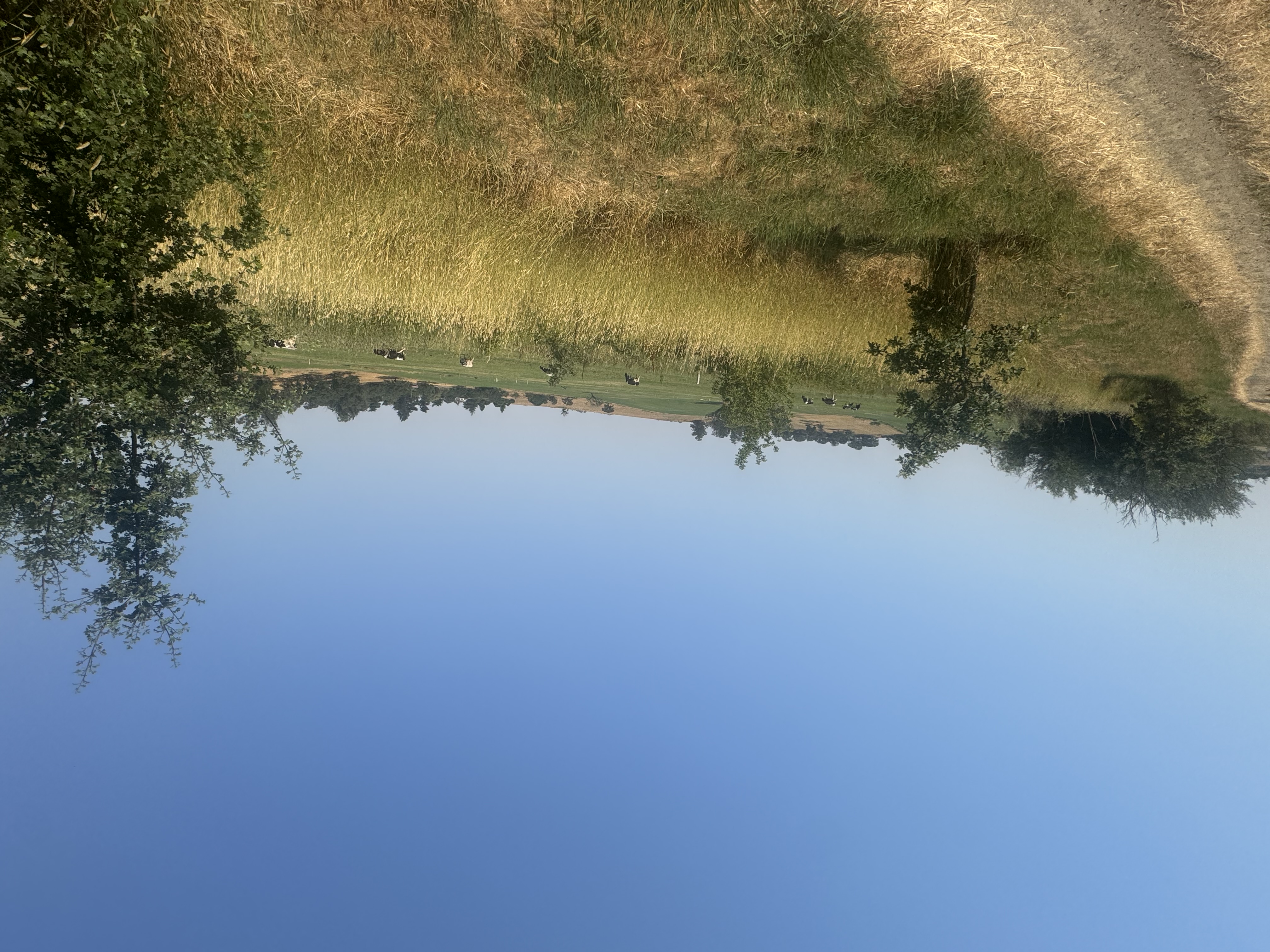
Southern Laguna Discovery Trail
Discover the rich biodiversity of the Laguna de Santa Rosa, the largest freshwater wetland complex in the San Francisco Bay Area. This easy trail winds through oak woodlands, riparian corridors, and seasonal wetlands.
Featured Species
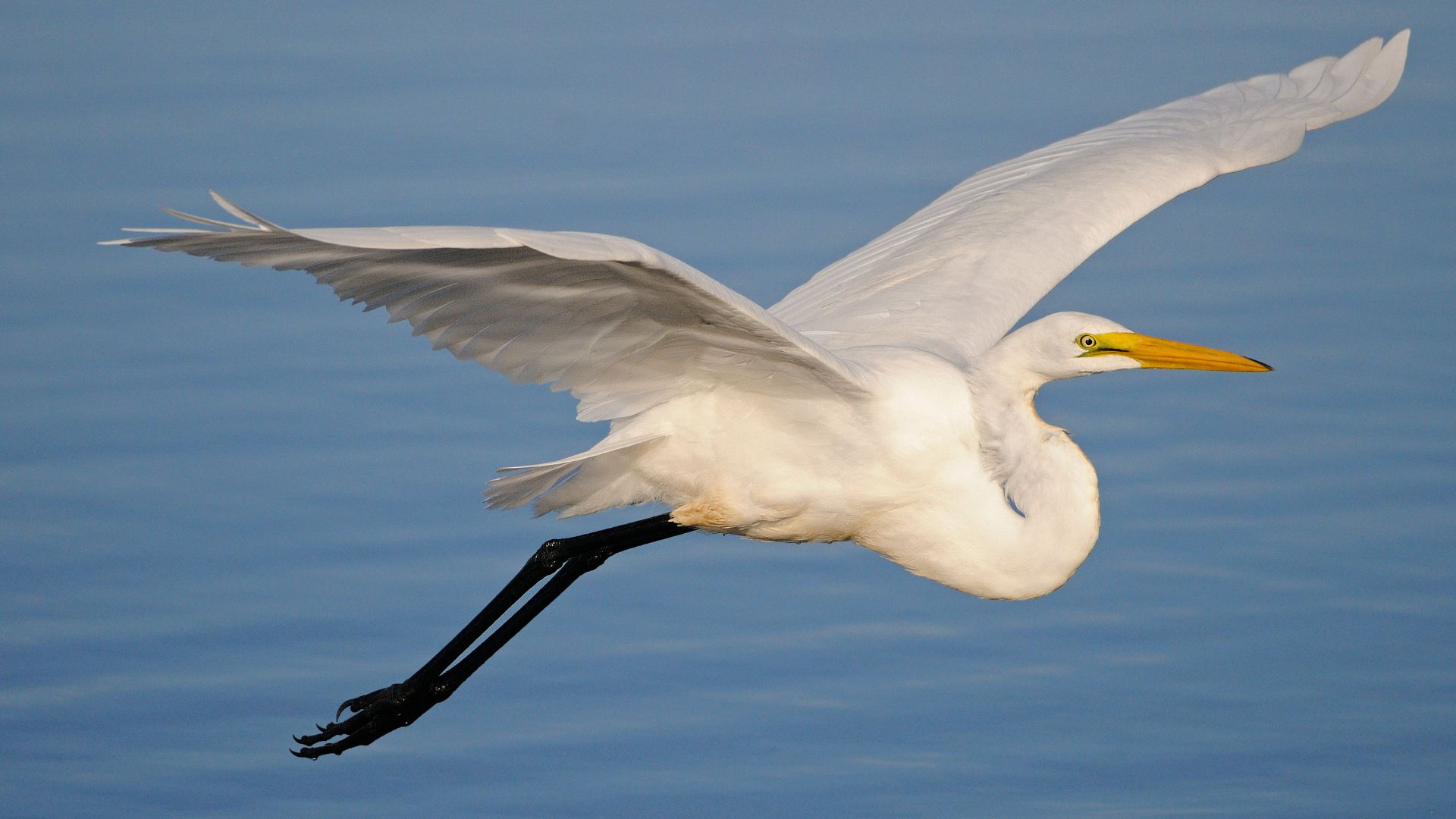
Great Egret
Ardea alba
These elegant, all-white wading birds are a stunning sight along the Laguna de Santa Rosa. Standing up to 3 feet tall with a wingspan of nearly 5 feet, Great Egrets move gracefully through shallow waters, hunting fish and frogs with their long, dagger-like yellow bills. Once nearly hunted to extinction for their plumes, they've made a remarkable comeback.
Habitat
Shallow wetlands, marshes, and along the Laguna de Santa Rosa. Often seen wading in still water.
Best Time
Year-round, especially active during early morning and evening hours
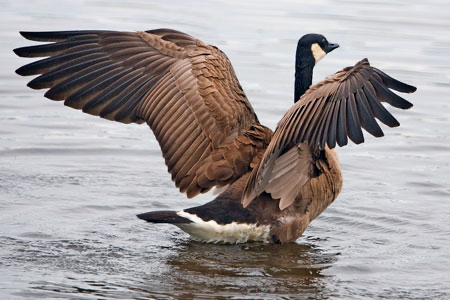
Canada Goose
Branta canadensis
The Canada Goose is one of the most recognizable waterfowl in North America, with its distinctive black head and neck, white chinstrap, and brownish-gray body. These highly social birds are known for their V-formation flying and loud honking calls. In California's Laguna region, they are year-round residents, thriving in the wetlands and open grasslands.
Habitat
Lakes, ponds, rivers, wetlands, and grassy areas near water. Often seen grazing in parks and agricultural fields.
Best Time
Year-round, especially active during morning and evening feeding times
Red-shouldered Hawk
Buteo lineatus
A beautiful woodland hawk commonly seen and heard throughout Sonoma County. The Red-shouldered Hawk has distinctive reddish-brown shoulders and a boldly banded tail. Their loud, repeated 'kee-ahh' calls echo through the oak woodlands, often mimicked by Blue Jays. These versatile hunters prey on small mammals, amphibians, reptiles, and crayfish.
Habitat
Riparian woodlands, oak forests, and suburban areas near water
Best Time
Year-round resident, most vocal during breeding season (February-May)
California Tiger Salamander
Ambystoma californiense
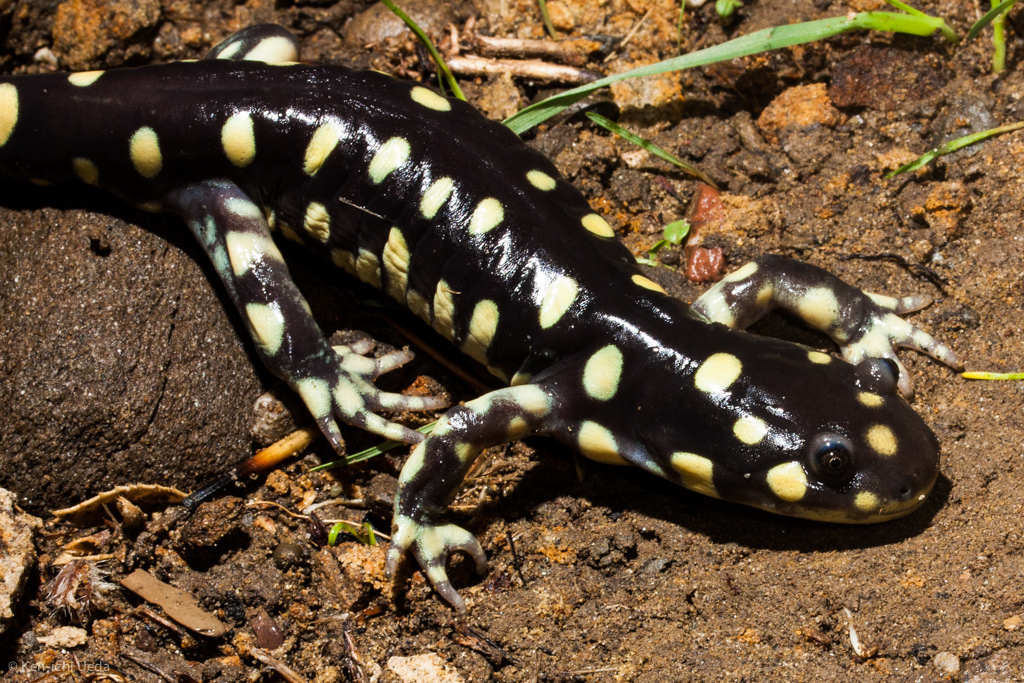
This stunning black salamander with bright yellow or cream spots is one of California's most endangered amphibians. They spend most of their lives underground in rodent burrows, emerging only on rainy nights to breed in seasonal pools. The Laguna de Santa Rosa is one of their critical remaining habitats, making it a vital conservation area.
Habitat
Underground in grasslands, emerging to breed in seasonal ponds and vernal pools
Best Time
Rainy nights from November through February during breeding migration

North American River Otter
Lontra canadensis
Playful, curious, and intelligent, River Otters have returned to the Laguna de Santa Rosa after being absent for decades. These charismatic mammals are often seen sliding down muddy banks, wrestling with each other, and hunting fish in the waterways. Their presence indicates improving water quality and ecosystem health in the Laguna.
Habitat
Rivers, streams, ponds, and wetlands with clean water and abundant fish
Best Time
Year-round, most active at dawn and dusk. Look for them in open water areas.

Bobcat
Lynx rufus
The Bobcat is California's most common wild cat, though they're rarely seen due to their secretive nature. These skilled predators patrol the edges of meadows and woodlands, hunting rabbits, rodents, and birds. With their distinctive spotted coat, tufted ears, and bobbed tail, they're beautiful additions to the local wildlife community.
Habitat
Woodland edges, brushy areas, and grasslands. Requires cover for stalking prey.
Best Time
Dawn and dusk, year-round. Occasionally spotted during the day in quiet areas.

Blue Dasher Dragonfly
Pachydiplax longipennis
Our namesake! The Blue Dasher is a stunning dragonfly with brilliant blue coloring on males and a green-yellow pattern on females. These aerial acrobats are masters of flight, capable of hovering, flying backwards, and catching prey mid-air. They're essential members of our ecosystem, controlling mosquito populations and serving as indicators of water quality.
Habitat
Found near ponds, streams, and our irrigation areas. They prefer still or slow-moving water with plenty of vegetation.
Best Time
Late spring through early fall, most active during warm, sunny afternoons
Great Egret
Ardea alba
These elegant, all-white wading birds are a stunning sight along the Laguna de Santa Rosa. Standing up to 3 feet tall with a wingspan of nearly 5 feet, Great Egrets move gracefully through shallow waters, hunting fish and frogs with their long, dagger-like yellow bills. Once nearly hunted to extinction for their plumes, they've made a remarkable comeback.
Fun Facts
- Nearly hunted to extinction in the late 1800s for their breeding plumes
- The Audubon Society was formed to protect egrets
- Can stand motionless for long periods waiting for prey
Canada Goose
Branta canadensis
The Canada Goose is one of the most recognizable waterfowl in North America, with its distinctive black head and neck, white chinstrap, and brownish-gray body. These highly social birds are known for their V-formation flying and loud honking calls. In California's Laguna region, they are year-round residents, thriving in the wetlands and open grasslands.
Fun Facts
- Mate for life and return to the same nesting areas each year
- Goslings can swim and feed themselves within 24 hours of hatching
- The V-formation helps conserve energy during long flights
Red-shouldered Hawk
Buteo lineatus
A beautiful woodland hawk commonly seen and heard throughout Sonoma County. The Red-shouldered Hawk has distinctive reddish-brown shoulders and a boldly banded tail. Their loud, repeated 'kee-ahh' calls echo through the oak woodlands, often mimicked by Blue Jays. These versatile hunters prey on small mammals, amphibians, reptiles, and crayfish.
Fun Facts
- Blue Jays often mimic their calls to scare other birds
- Pairs often return to the same nesting territory year after year
- Can catch crayfish and frogs from shallow water

American White Pelican
Pelecanus erythrorhynchos
These magnificent birds are one of North America's largest, with wingspans reaching 9 feet. Unlike Brown Pelicans, White Pelicans don't dive for fish—instead, they work cooperatively in groups, herding fish into shallow water where they can scoop them up. Seeing a flock of these enormous white birds soaring overhead is an unforgettable sight.
Fun Facts
- Can hold up to 3 gallons of water in their pouch
- Don't dive like Brown Pelicans—fish cooperatively
- Form breeding colonies of several hundred pairs

Canada Goose
Branta canadensis
The iconic Canada Goose is a familiar sight and sound throughout the Laguna wetlands. Their distinctive honking calls and V-formation flights signal the changing seasons. These large waterfowl mate for life and are devoted parents. While some populations are resident year-round, others still make impressive migratory journeys along the Pacific Flyway.
Fun Facts
- Mate for life and mourn when a partner dies
- Can fly at speeds up to 50 mph
- Goslings can swim and feed themselves within 24 hours of hatching
California Tiger Salamander
Ambystoma californiense
This stunning black salamander with bright yellow or cream spots is one of California's most endangered amphibians. They spend most of their lives underground in rodent burrows, emerging only on rainy nights to breed in seasonal pools. The Laguna de Santa Rosa is one of their critical remaining habitats, making it a vital conservation area.
Fun Facts
- Spend up to 95% of their lives underground
- Can live up to 15 years
- Larvae are voracious predators of mosquito larvae
California Freshwater Shrimp
Syncaris pacifica
This tiny, nearly transparent shrimp is found nowhere else on Earth except in a handful of coastal streams in Marin, Sonoma, and Napa counties. The Laguna de Santa Rosa is one of their last remaining strongholds. These endangered creatures are indicators of healthy stream ecosystems and play important roles in the aquatic food web.
Fun Facts
- Endemic to Northern California—found nowhere else on Earth
- Listed as endangered since 1988
- Can live up to 3 years

Sebastopol Meadowfoam
Limnanthes vinculans
This delicate white wildflower with yellow centers exists only in the wet meadows and vernal pools around Sebastopol. Listed as endangered, Sebastopol Meadowfoam blooms in spring, creating carpets of white in its remaining habitat. Conservation efforts in the Laguna de Santa Rosa help protect this beautiful and rare endemic species.
Fun Facts
- Found only in a 30-square-mile area around Sebastopol
- Listed as federally endangered since 1991
- Requires very specific soil and water conditions
North American River Otter
Lontra canadensis
Playful, curious, and intelligent, River Otters have returned to the Laguna de Santa Rosa after being absent for decades. These charismatic mammals are often seen sliding down muddy banks, wrestling with each other, and hunting fish in the waterways. Their presence indicates improving water quality and ecosystem health in the Laguna.
Fun Facts
- Can hold their breath for up to 8 minutes
- Have the densest fur of any mammal
- Extremely playful even as adults
Gray Fox
Urocyon cinereoargenteus
The Gray Fox is the only canid in North America that can climb trees, thanks to its rotating forearms and strong, hooked claws. These beautiful foxes have grizzled gray coats with rusty red along their sides, ears, and legs. They're more secretive than their red fox cousins and prefer woodland habitats where they hunt rodents, rabbits, and berries.
Fun Facts
- The only canid that can climb trees
- Can climb straight up tree trunks
- More closely related to ancient foxes than red foxes
Coyote
Canis latrans
The song of coyotes at dusk is one of the quintessential sounds of ranch life. These highly adaptable canids are intelligent, social animals that play important roles in our ecosystem by controlling rodent and rabbit populations. While often heard, they're shy around humans and maintain their distance. Their presence connects us to the wild heart of the landscape.
Fun Facts
- Can run up to 40 mph for short bursts
- Highly intelligent with complex social structures
- Range has expanded as wolf populations declined

American Mink
Neovison vison
Sleek and secretive, the American Mink is a semi-aquatic predator found along the waterways of the Laguna. With their rich, dark brown fur and excellent swimming abilities, they hunt fish, crayfish, frogs, and small mammals. Though rarely seen due to their shy nature, minks are important predators in wetland ecosystems.
Fun Facts
- Can dive to depths of 16 feet
- Excellent swimmers who can stay underwater for minutes
- Have a musky scent they use to mark territory

American Badger
Taxidea taxus
These powerful, low-slung digging machines are grassland specialists, perfectly adapted for pursuing ground squirrels and other burrowing prey. With their distinctive black and white striped face and incredibly strong forelimbs, badgers can dig faster than any other mammal. They're primarily nocturnal and leave characteristic large burrows in open areas.
Fun Facts
- Can dig faster than any other mammal
- Sometimes hunt cooperatively with coyotes
- Their burrows provide homes for many other species
Bobcat
Lynx rufus
The Bobcat is California's most common wild cat, though they're rarely seen due to their secretive nature. These skilled predators patrol the edges of meadows and woodlands, hunting rabbits, rodents, and birds. With their distinctive spotted coat, tufted ears, and bobbed tail, they're beautiful additions to the local wildlife community.
Fun Facts
- Can leap up to 10 feet in a single bound
- Named for their short, bobbed tail
- Have excellent night vision
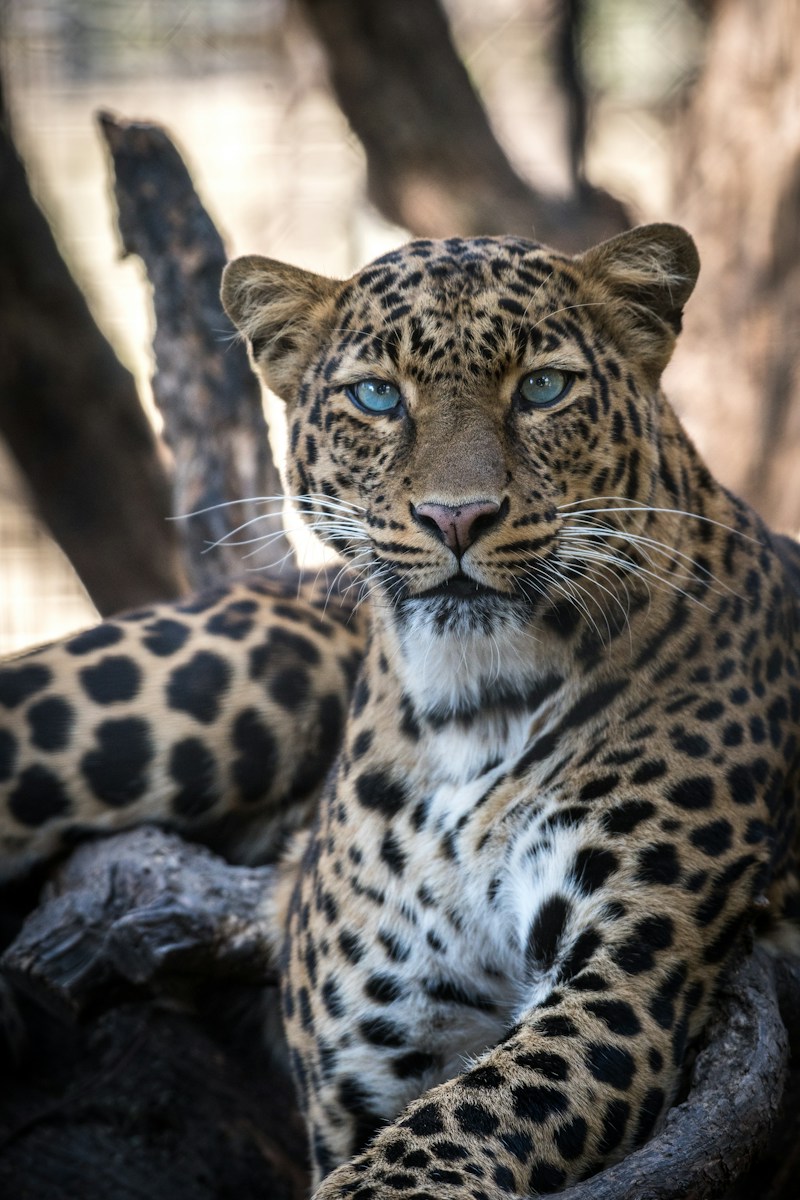
Mountain Lion
Puma concolor
Also known as cougars or pumas, Mountain Lions are the largest wild cats in the region. These powerful, solitary hunters require large territories and healthy deer populations. While sightings are rare, their presence in the surrounding hills indicates a healthy, intact ecosystem. They typically avoid humans and are most active at night.
Fun Facts
- Can leap 18 feet vertically and 40 feet horizontally
- Have the largest range of any wild cat in the Americas
- Cannot roar like African lions—they purr, hiss, and scream
Blue Dasher Dragonfly
Pachydiplax longipennis
Our namesake! The Blue Dasher is a stunning dragonfly with brilliant blue coloring on males and a green-yellow pattern on females. These aerial acrobats are masters of flight, capable of hovering, flying backwards, and catching prey mid-air. They're essential members of our ecosystem, controlling mosquito populations and serving as indicators of water quality.
Fun Facts
- Can see in all directions simultaneously with their compound eyes
- Can fly at speeds up to 30 mph
- Have been around for over 300 million years